Michi Desk
options research, in progressA research dashboard for options trades that tracks whether my thinking was right, separately from whether I made money. Those two things get conflated constantly and it makes people worse at both.
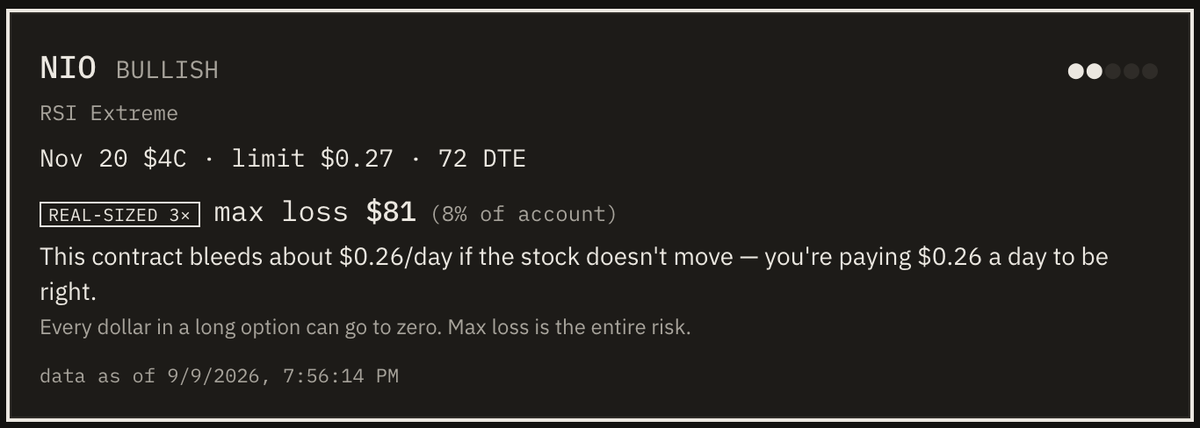
It scans a watchlist for unusual options activity. Signals that clear liquidity and expiration floors go to a Claude adjudicator that returns a structured card: the case, the bear case, entry zone, stop, target, confidence rating. Every card gets logged whether I take it or not, with a forced written reason. A resolver then walks daily price history to determine which plan level got hit first, so the journal can compare cards generated against trades taken against trades passed.
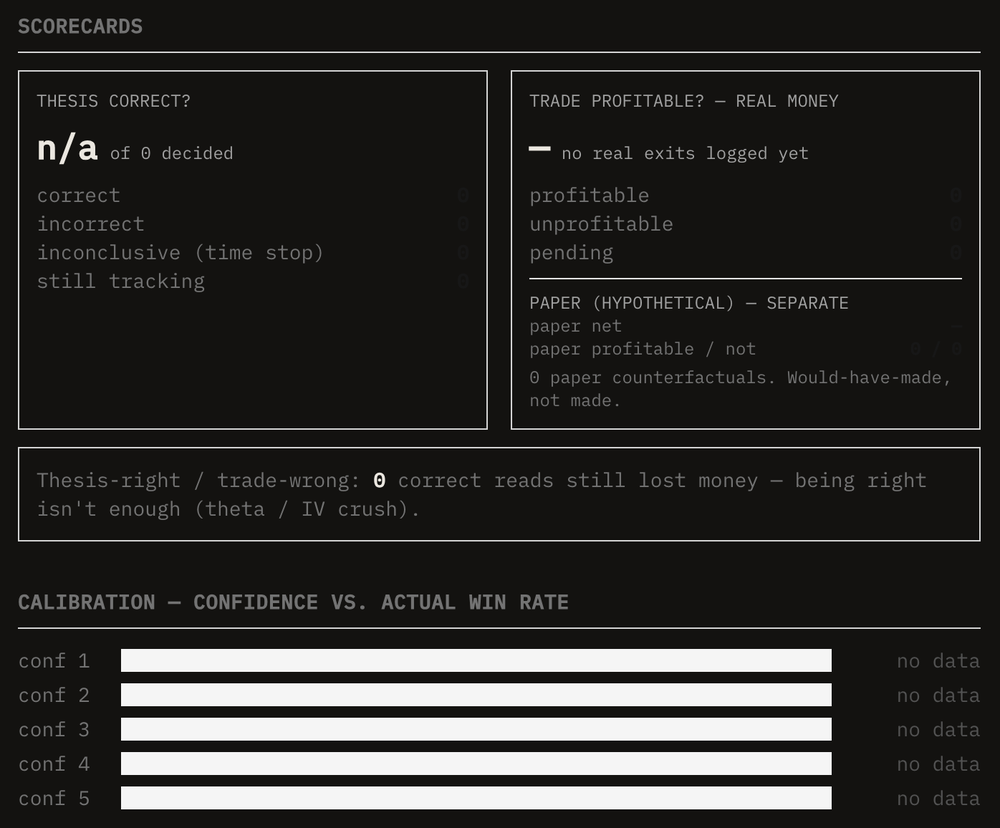
The design constraint that shaped everything: it can't be allowed to flatter me. Low conviction cards have to be able to say so. The first live run returned a confidence of 1 unprompted, which is when I knew the prompt was working. Inconclusive outcomes get bucketed separately instead of counted as wrong. Hypothetical positions are labeled as hypothetical and never shown as real returns. It would be very easy to build a version of this that makes me feel like a genius. That version would be useless.
Up next: the full journal screen with scorecards, a calibration curve, and a head to head of my calls against the app's.
Python and FastAPI on SQLite, React PWA frontend, Tradier for market data, Anthropic API for adjudication. 93 tests passing. Built with Claude Code.